
What if the most critical element in a multimillion-dollar museum display isn’t the artifact itself, but the nearly invisible shield that protects it? In the world of high-stakes presentation, from safeguarding priceless historical relics to showcasing corporate trophies, the choice of material can mean the difference between timeless preservation and irreversible degradation. As we move through 2026, a profound understanding of premium clear acrylic has become essential knowledge for professionals who value precision, clarity, and long-term value in presentation. This guide will demystify the unique properties that make this engineered polymer the material of choice for conservationists and designers at the world’s most prestigious institutions.
For experts in fields like finance or project management, where precision and protecting value are paramount, the science behind museum-quality displays offers powerful analogies and practical insights. Premium clear acrylic represents more than just plastic; it’s a sophisticated material engineered to specific optical, chemical, and physical standards. Over the next sections, you’ll learn exactly what defines this premium grade, discover the scientific reasons museums depend on it for sensitive artifacts, understand the crucial differences between commercial and conservation-grade materials, and see how these same principles apply to creating enduring awards and recognition pieces. You’ll gain a clear framework for specifying and identifying true museum-grade acrylic, ensuring your most important items are displayed with the utmost integrity and visual impact.
What Exactly is Premium Clear Acrylic?
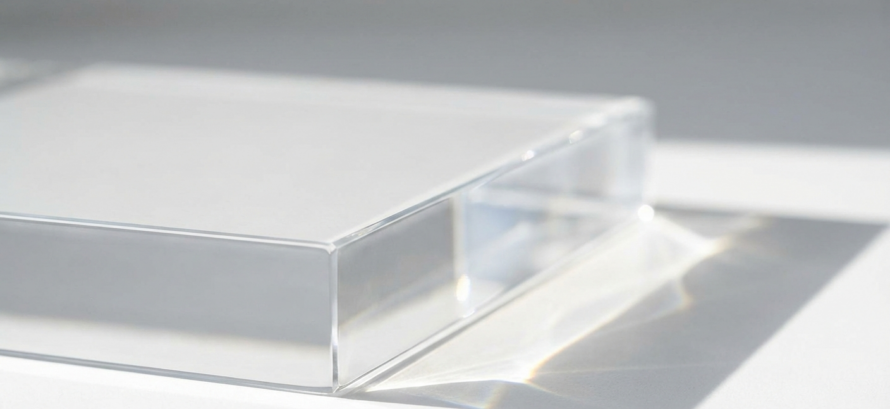
When professionals refer to “premium clear acrylic,” they are describing a specific, high-grade formulation of polymethyl methacrylate (PMMA), a synthetic polymer known for its exceptional balance of clarity, strength, and stability . Unlike standard acrylics or glass, the premium variant is engineered to meet exacting standards that prioritize long-term artifact preservation and optical perfection. Think of it not as a simple sheet of plastic, but as a high-performance optical component, where every stage of its manufacturing is controlled to eliminate impurities and internal stresses that could compromise its function.
The journey to a premium sheet begins with the manufacturing process. There are two primary methods: extrusion and cell casting. For museum and preservation applications, cell-cast acrylic is the undisputed standard. In this process, the liquid monomer is poured between two sheets of high-quality glass and then polymerized in a carefully controlled oven. This method results in a sheet with superior optical clarity, higher molecular weight, greater chemical stability, and much lower internal stress . Critically, cast acrylic contains fewer plasticizers and additives that can volatilize over time, a process known as off-gassing, which can damage sensitive artifacts. Extruded acrylic, formed by pushing material through a die, is more common in commercial applications but is generally avoided in conservation settings because it is more likely to emit harmful volatile organic compounds (VOCs) .
Key Properties That Define the Premium Grade
The “premium” label is earned through a combination of measurable properties that directly impact display performance and conservation safety. First is optical clarity. Premium clear acrylic offers light transmission rates of 92% or higher, often exceeding that of standard glass, which can have a slight green tint due to iron content . This creates a “water-white” appearance, presenting colors and details with uncompromised accuracy. Second is UV stability. While all acrylic has some resistance to ultraviolet light, premium grades are formulated with advanced UV inhibitors that block up to 90% of harmful UV rays, protecting sensitive pigments, textiles, and documents from fading . However, it’s vital to note that this UV protection can degrade over a period of approximately 10 years, a key factor in lifecycle planning .
Finally, material inertness is non-negotiable. A true museum-grade acrylic must pass conservation safety tests, such as the Oddy Test, which assesses whether a material will emit corrosive gases when enclosed with metal, organic, or other sensitive materials . Premium cast acrylic from trusted manufacturers like Plexiglas® UF3 or Acrylite® OP2 is specifically engineered to meet these stringent requirements, ensuring the display case becomes a protective microclimate, not a threat to its contents .
Why Museums Choose Acrylic Over Glass for Critical Displays
The choice between acrylic and glass for museum display cases is a calculated decision based on the specific needs of the collection, the exhibit’s duration, and operational logistics. While glass offers a timeless aesthetic and extreme long-term durability, premium clear acrylic provides a compelling set of advantages that make it the preferred choice for countless applications within leading institutions. The decision matrix used by museum curators and exhibit designers offers a masterclass in strategic material selection, balancing protection, presentation, and practicality.
One of the most significant operational advantages is weight and safety. Acrylic weighs approximately half as much as glass of comparable thickness . This dramatically simplifies handling, shipping, and installation, reducing labor costs and structural requirements for exhibit furniture. Furthermore, acrylic is inherently shatter-resistant. While laminated safety glass is designed to hold together if broken, acrylic will not shatter into dangerous shards, making it a safer choice in public spaces, for traveling exhibitions, or for displays featuring heavier objects where impact risk is a concern . This combination of lightness and resilience is why you’ll find acrylic used in massive public aquariums, like the Georgia Aquarium, where immense water pressure and public safety are top priorities .
Matching the Material to the Exhibit’s Mission
Museum professionals operate on a clear rule of thumb: acrylic is the strategic choice for short- to medium-term exhibits, typically those planned for less than two years . For these scenarios, its benefits are unmatched. The lower initial cost, both in material and fabrication, allows institutions to allocate more budget to interpretative elements or a wider range of exhibits . The faster fabrication lead time is also crucial; with more specialized fabricators available, acrylic cases can be produced and delivered in a fraction of the time required for custom glass cases, which can have lead times of 120 to 210 days . This agility is perfect for special temporary exhibitions, touring shows, or rapidly developed displays.
However, professional transparency requires acknowledging the trade-offs. For permanent collections or exhibits intended to last a decade or more, glass is often the definitive choice. Glass does not scratch as easily, will not cloud with repeated cleaning, and its UV-blocking properties in laminated form do not degrade over time . A high-quality glass case is considered a 25-year capital investment, whereas an acrylic case is viewed as a shorter-term operational expense . The key for any professional is to align the material’s properties with the project’s goals, lifespan, and conservation requirements from the very beginning.
| Criteria | Premium Clear Acrylic | Laminated Museum Glass | Best For… |
|---|---|---|---|
| Primary Cost | Lower material & fabrication cost | Higher initial investment | Acrylic: Budget-conscious, temporary projects. Glass: Long-term capital projects. |
| Weight & Handling | ~50% lighter than glass, easier to install | Very heavy, requires reinforced structures | Acrylic: Traveling exhibits, upper-floor galleries, frequent reconfiguration. |
| Durability & Lifespan | 2-10+ years; scratches more easily | 25+ year lifespan; highly scratch-resistant | Acrylic: Short-term exhibits (<2 yrs). Glass: Permanent collections. |
| Conservation Safety | Must specify cast, UV-inhibiting grade to pass Oddy tests | Inert; laminated foil provides stable UV protection | Glass: Maximum, long-term artifact safety. Acrylic: Suitable for short-term with correct spec. |
| Optical Clarity | >92% light transmission; “water-white” clarity | Low-iron glass offers superior clarity; standard glass has green tint | Both can be excellent. Low-iron glass is top-tier; premium acrylic exceeds standard glass. |
Design and Fabrication: Achieving a Museum-Quality Finish
Specifying the right material is only the first step. Transforming premium clear acrylic sheets into a flawless display case or award requires specialized fabrication techniques and an understanding of how design impacts final performance. The goal is to create a structure where the material itself seems to disappear, focusing all attention on the displayed object. This requires meticulous attention to joint construction, edge finishing, and mounting—principles that apply equally to a museum vitrine for a historic document and a modern award for corporate achievement.
Fabrication techniques are critical to both aesthetics and structural integrity. For case construction, the method of bonding panels together is a key differentiator. Solvent welding uses a chemical agent to fuse the acrylic at a molecular level, creating a strong, permanent bond. While this method can sometimes leave a barely visible seam, it is incredibly durable . For applications where optical perfection at the joint is paramount, UV-bonding or specific adhesives like PS-30 are used to create “bubble-free” seams. It’s important to note that these adhesive-based bonds are physical rather than chemical, and their long-term stability in conservation environments should be verified . The design must also account for acrylic’s tendency to expand and contract with temperature changes more than glass, requiring careful engineering of joints and supports to prevent stress and cracking.
Finishing and Maintenance: Preserving the Perfect Surface
The flawless surface of a new acrylic sheet must be protected through finishing and proper care. Edge finishing is a hallmark of quality. A finely machined and polished edge will be as clear and transparent as the sheet’s surface, appearing almost invisible. A poorly finished edge will look frosted or cloudy, detracting from the display’s elegance. For a truly frameless look, edges are often polished to a high-gloss finish. When it comes to maintenance, handling is everything. Acrylic is softer than glass and can be scratched by abrasive cloths, dust, or improper cleaning chemicals.
-
Cleaning Protocol: Use a microfiber cloth and a dedicated acrylic cleaner or a mild solution of dish soap and water. Always spray the cloth, not the surface, to prevent liquid from seeping into seams.
-
What to Avoid: Never use window cleaners, ammonia, or alcohol-based products, as they can cause crazing (fine cracks) and clouding over time . Avoid paper towels, which can contain wood fibers that scratch.
-
Static Control: Acrylic can attract dust due to static. Using an anti-static cleaner formulated for acrylic can help mitigate this issue and keep displays looking pristine with minimal effort .
From Museum Halls to Corporate Walls: Practical Applications
The principles governing museum displays have direct, powerful applications in the corporate and recognition world. The same demand for clarity, prestige, and preservation that leads a museum to choose premium acrylic for a rare artifact applies to a company seeking the perfect medium for an award, a milestone plaque, or an executive presentation piece. Understanding these parallels allows you to make informed choices that elevate standard recognition into a lasting legacy object.
In the awards industry, premium clear acrylic has revolutionized trophy and plaque design. Its ability to be precisely laser-cut and deeply laser-engraved allows for breathtaking dimensionality and crisp, permanent detailing that traditional materials can’t match . A complex company logo, an intricate pattern, or even a three-dimensional sculptural effect can be captured within the crystal-clear block, creating a dynamic object that plays with light and perspective. Unlike traditional glass awards, these pieces are inherently shatter-resistant, making them safer to ship, handle, and display in active environments . The material’s neutrality provides a perfect canvas, allowing colored infills, embedded elements, or integrated lighting to take center stage, resulting in a truly custom piece that reflects the significance of the achievement it represents.
Featured Brand: Plaque of Legacy
For those seeking to apply museum-quality standards to corporate recognition, Plaque of Legacy specializes in transforming premium clear acrylic into bespoke awards and plaques that are designed to last.
By leveraging the same material science and attention to detail demanded by conservators, we create pieces that are more than just trophies, they are enduring symbols of excellence. Our process involves:
-
Premium Material Selection: We use only high-grade, cast acrylic to ensure optical clarity and long-term stability, avoiding the yellowing or clouding associated with inferior plastics.
-
Precision Fabrication: Utilizing state-of-the-art laser cutting and engraving technology, we achieve razor-sharp edges and deep, flawless engraving that captures every detail of your design.
-
Conservation-Inspired Finishing: Each piece undergoes meticulous hand-finishing and polishing, resulting in a brilliant, glass-like surface that is protected against everyday handling.
Whether you are commemorating a record-breaking trading quarter, a lifetime achievement, or a major corporate anniversary, the principles of museum-quality display ensure your message is presented with the utmost impact and preserved for generations. Explore our custom design process to see how we can craft your legacy.
Conclusion: The Clear Choice for Lasting Impact
The journey through the world of premium clear acrylic reveals a material defined by intentional engineering and strategic application. It is not merely an alternative to glass, but a sophisticated solution with a specific set of strengths: unmatched shatter-resistance for safety, half the weight for logistical flexibility, superior optical clarity for visual impact, and the ability to meet stringent conservation standards when properly specified. Its use in museums is a testament to its ability to protect value while presenting it with invisible elegance. These very same qualities, durability, clarity, and prestige, make it an exceptional choice for creating meaningful awards, recognition plaques, and displays that are designed to honor achievement for years to come.
Whether you are curating a priceless collection or seeking to permanently capture a moment of corporate triumph, the principles remain the same. Success lies in specifying the right grade, understanding the required care, and partnering with fabricators who respect the material’s potential. By applying these museum-grade standards to your projects, you ensure that what you display is not only seen in its best light but is also preserved for the future.
Ready to translate the principles of museum-quality presentation into a timeless award or plaque for your next major achievement? Explore the custom design possibilities at Plaque of Legacy and begin crafting a legacy piece worthy of the moment. https://plaqueoflegacy.com/

